What Problems Can Undesired Magnetism Create and How Can I Solve These Problems?

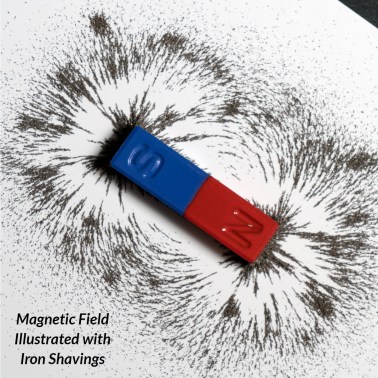
During the manufacturing process, magnetism, most often measured in gauss, can be introduced into both non-magnetically conductive material (such as stainless steel) and  magnetically conductive materials in numerous ways. In addition to contact with magnets,  actions such as grinding, welding and machining can introduce magnetism that may be retained in the product.
rendered (2)

Why Is It Important to Remove Undesired Magnetism?

Undesired magnetism can cause numerous, costly and time consuming problems in further production or for the end user.

In production, undesired magnetism can cause the following problems:

  • Interference with machining as cuttings stick to components.
  • Contamination that cannot be easily removed through normal parts washing processes.
  • Arc blow in the welding process that can make welding difficult if not impossible.
  • Problems with electroplating and e-coat that make these processes difficult if not impossible.
  • Problems with automated visual inspection equipment as clinging debris provides false dimensional data.
  • Causes increased bearing wear.

For the end user, the problems can be vast depending on the application.

How Is Demagnetizing (Degaussing) Accomplished?

There are multiple ways to reduce a components’ magnetic field, or degauss a product.

Degauss Through Heat

When a metal’s temperature is increased above its curie point, the magnetic domains inside the material become randomly oriented and its magnetic properties are removed.  The curie points for specific materials can be found here. One common way materials may be degaussed is through heat treat, depending on how long and in what environment the product is treated.

Degauss Through Alternating Current

It is often not possible to heat a material above its curie point without introducing dimensional imperfections into the component. In this case, the use of an alternating current is preferable.  An alternating current creates rapidly changing magnetic fields that disrupt the magnetic domains within the material. By passing the component through these changing fields, the component’s magnetization is reduced.

Once degaussing is complete, it is important to obtain a gauss reading to ensure the desired level of magnetism has been achieved.

What Field Strength/Gauss Level is Right For My Product?

Acceptable gauss levels are usually determined by the end user or design specifications which take into account further processing and end-user usage. Normally, a gauss reading of 2 or below is acceptable by most industry standards. Below is a list of field strengths and what effect they may have on products.

Gauss Readings and Corresponding Effects at that Level:

  • 200 gauss = Permanent magnet
  •   30 gauss = Interferes with welding
  •   20 gauss = Metal cuttings (paper clip size) stick
  •   10 gauss = Small metal debris/shavings stick
  •     4 gauss = Metal dust sticks
  •  0.25 – 0.60 gauss = Earth’s magnetic field at the surface

IPS Has Over 25 Years of Experience Solving Undesired Magnetism Challenges.

Contact IPS Today to Discuss Your Demagnetism/Degauss needs.


← Back

Thank you for your response. ✨


What is Ultrasonic Cleaning, How Does It Work, and Is It the Best Way To Clean Industrial Parts?

Professional Ultrasonic Cleaning of Industrial Components

As more and more cleaning professionals turn away from hazardous chlorinated and fluorinated solvents, the use of ultrasonic cleaning has moved into the mainstream industrial cleaning industry. Ultrasonic cleaning provides a safe, effective and environmentally friendly way to meet the demands of critical cleaning specifications on both robust and very delicate parts. Let’s take a quick look at this process so you can determine if this approach may be right for you.

How Does Ultrasonic Cleaning Remove Contaminants from Metals, Ceramics, Plastics and Other Non-Porous Surfaces?

Ultrasonic cleaning uses sound waves at frequencies above what is audible by the human ear. As the sound wave energy travels through the aqueous cleaning solution, small micron-sized bubbles are formed and quickly grow, storing tremendous amounts of energy and pressure inside. When one of these bubbles reaches an unstable size, it implodes, creating a jet about 1/10th the bubble’s size. The jet, traveling at speeds in excess of 400 km/hr., very effectively and efficiently knocks off surface contaminants. This formation and subsequent implosion of bubbles is called cavitation and is what gives ultrasonic cleaning its incredible cleaning power.

Since the bubbles are so small, they are extremely gentle to the underlying substrate. Delicate components are left unharmed and the smallest crevices are effectively cleaned.

cavitation

The Cavitation Process

Contaminants frequently removed with ultrasonic cleaning include, but are not limited to:

  • Buffing and polishing compounds
  • Cutting Oils from Machining Operations
  • Paraffin based RPs
  • Cleaning greases and sludge from rebuilt components
  • Metal Chips
  • Dirt and debris

Benefits of Choosing IPS for Your Ultrasonic Cleaning Needs:

  • Our experience, expertise and machinery enables cleaning processes gentle enough for delicate components, such as disc drives, solar cells and panels, and quartz transducers.
  • Ultrasonic cleaning provides excellent penetration and cleaning between crevices and tightly spaced parts.
  • Our ultrasonic cleaners have frequencies powerful enough to remove tough contaminants from robust parts.
  • Our cleaning processes are environmentally safe.
  • Our ultrasonic machines have the capacity to handle high volume jobs quickly and efficiently to meet your production deadlines. We have both large and small sized machines to handle multiple parts cleaning challenges.
  • Our ultrasonic machines cover a wide range of frequencies, from 40 to 1000 kHz to ensure your parts are cleaned safely and efficiently.
  • Our full-time chemist will determine the best cleaning solutions, frequencies and temperatures to safely clean your parts.

Contact Us Today!

← Back

Thank you for your response. ✨

shutterstock_520399477

Kitting Services Now Available from IPS Group LLC in Northwest Ohio

When your business requires the packaging of multiple parts into a product kit, IPS Group’s new Kitting Services are the perfect fit. Kitting is ideal for subsequent assembly, installation, or for direct customer sale.

IPS Group has decades of experience in automotive and industrial product kits. We will custom tailor a kitting solution for your large or small project to help you create efficiency in your downstream processes, and economically manage changes in demand.

Our location in Northwest Ohio enables us to deliver fast and economically throughout the United States and Canada.

Get started today using IPS kitting to reduce inventory, overhead, shipping, and internal labor costs.

Call 419-241-5955 or Contact us via email.